Colorado's four national parks
Colorado has four national parks, and they could hardly be more different: Rocky Mountain, with alpine lakes and tundra along the Continental Divide; Mesa Verde, with Ancestral Puebloan cliff dwellings in the southwest corner; Great Sand Dunes, with the tallest dunes in North America; and Black Canyon of the Gunnison, with one of the steepest and narrowest canyons on the continent. They are far apart, so most visitors choose one or two. If you plan to visit several, an America the Beautiful annual pass covers entry to all of them.
Rocky Mountain National Park
About 90 minutes northwest of Denver, with Estes Park as its eastern gateway and Grand Lake on the west side, Rocky Mountain National Park protects more than 400 square miles of high country. Trail Ridge Road crosses the park and climbs above 12,000 feet, with pullouts over tundra where elk graze in summer. It usually opens in late May and closes for the season in mid-October.
The park's most popular day hike starts at Bear Lake: a 3.6-mile round trip with about 650 feet of climbing past Nymph and Dream lakes to Emerald Lake, which sits in a basin beneath the cliffs of Hallett Peak and Flattop Mountain. Start early to get parking and to finish before afternoon storms. From late May to mid-October the park uses a timed-entry reservation system, with a separate permit for the Bear Lake Road corridor, so book through Recreation.gov before you arrive.
Mesa Verde National Park
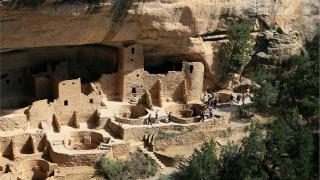
In the far southwest near Cortez, Mesa Verde preserves thousands of archaeological sites left by the Ancestral Puebloan people, who lived on and below the mesa for roughly 700 years before moving south around 1300. The best-known sites are the cliff dwellings built into alcoves in the canyon walls during the 1200s.
Cliff Palace is the largest cliff dwelling in the park, and the only way to enter it is on a ranger-guided tour. Balcony House, reached by ladders and a short crawl through a tunnel, is another tour favourite and is not for anyone uncomfortable with heights or tight spaces. Tours run in the warmer months, sell out, and must be booked in advance online. Spruce Tree House, the park's third-largest and best-preserved dwelling, has been closed to visitors since 2015 because of rockfall danger, but you can view it from overlooks behind the Chapin Mesa Archeological Museum. The Mesa Top Loop Road, a self-guided drive with short walks to pithouses and overlooks, is good for families who want to see the sites without a tour.
Great Sand Dunes National Park
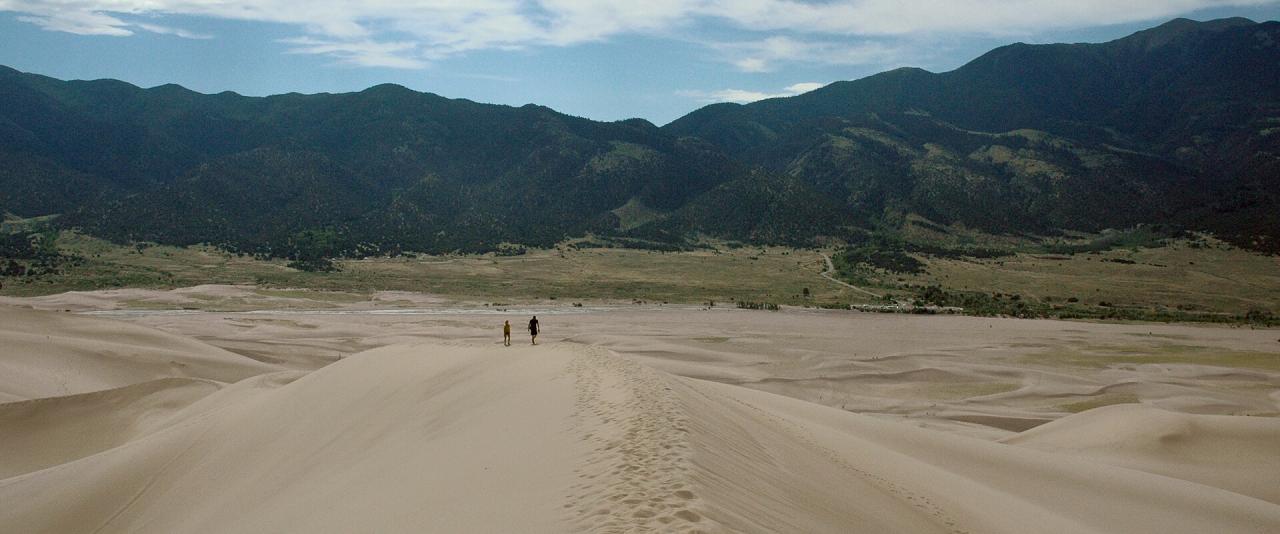
In the San Luis Valley, Great Sand Dunes rises against the Sangre de Cristo Mountains. The tallest dunes stand more than 700 feet above the valley floor. There are no trails on the sand: you walk out from the main parking area and climb as far as you like. In late spring and early summer, snowmelt usually sends Medano Creek flowing across the base of the dunes, creating a shallow seasonal stream popular with families. Summer sand can get very hot by midday, so go early or late.
Black Canyon of the Gunnison National Park
East of Montrose, the Gunnison River has cut a canyon about 2,000 feet deep in places and, at its narrowest, only a few hundred yards wide at the rim. The South Rim Road runs about seven miles along the edge with a dozen overlooks; the Painted Wall, streaked with pale bands of pegmatite, is the tallest cliff in Colorado at around 2,250 feet. The North Rim is quieter and reached by a partly gravel road that closes in winter. Inner-canyon routes are steep, unmaintained and require a wilderness permit.
Altitude, storms and timing
Several of these parks sit high: Bear Lake is at about 9,450 feet and Trail Ridge Road crosses 12,000, while Mesa Verde's mesa top is around 7,000 to 8,500 feet. Drink plenty of water, take the first day easily, and use sunscreen even on cool days. From July to August, thunderstorms form most afternoons over the mountains, bringing lightning, hail and sudden temperature drops. Plan hikes for the morning, carry a rain jacket and warm layer, and leave exposed ridges and tundra at the first sign of thunder.
Summer is the busiest season in all four parks. September is often the best month: the weather is usually settled, the elk rut is under way in Rocky Mountain National Park, and aspens begin to turn gold later in the month.