Colorado has four national parks, and each does something different. Rocky Mountain is for alpine scenery, wildlife and high trails. Mesa Verde preserves Ancestral Pueblo cliff dwellings. Great Sand Dunes has the tallest dunes in North America. Black Canyon of the Gunnison is a sheer, dark gorge. They're far apart, so most trips pair Rocky Mountain with Denver and the other three with a loop through southern Colorado. Summer through early fall is the main season for all of them, but each has its own best window. A national monument or a state park often makes a good, less crowded addition to the route.
Rocky Mountain National Park
What it's for: Alpine tundra you can drive to, elk and bighorn sheep, lakes and hikes, and Trail Ridge Road. The park covers over 415 square miles of the Southern Rockies. Trail Ridge Road (US 34) runs 48 miles between Estes Park and Grand Lake. Eleven of those miles are above treeline, and it tops out at 12,183 feet, making it the highest continuous paved road in the nation.
Best season: Late June to September for the high country. Trail Ridge Road closes to through traffic from mid-October to late May. September brings golden aspens and the elk rut, when bull elk bugle in Moraine Park and Horseshoe Park.
Know before you go: From late May to mid-October you need a timed-entry reservation to drive in during the day (see our Passes & Permits guide). Entry costs $30 for a day or $35 for seven days per vehicle. Since 2026, non-residents 16 and over also pay a $100 surcharge unless they hold an annual pass. At the tundra stops it's normally windy and 20 to 30 degrees colder than in Estes Park, so bring a jacket even in July. Trail Ridge Road conditions are on a recorded line, (970) 586-1222.
Mesa Verde National Park
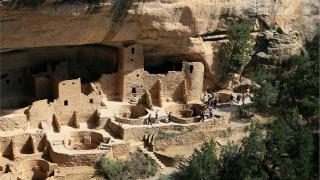
What it's for: Cliff dwellings built by Ancestral Pueblo people, set into the canyon walls. Cliff Palace, the largest known cliff dwelling in North America, was built between 1190 and 1280 CE. The park is in the far southwest corner of the state near Cortez, at roughly 7,000 feet.
Best season: May to October, when the ranger-led tours run. In 2026 most tours ran May 4 to October 21, and Wetherill Mesa opened May 22. Outside that window you can still see dwellings from overlooks and visit the museum, but you can't go inside the big sites.
Know before you go: You can only enter Cliff Palace, Balcony House and the other main dwellings on a ranger-led tour. Book on Recreation.gov, where tickets open 14 days ahead at 8 a.m. Mountain Time and sell out early. Cliff Palace is a 45-minute tour with four ladders and a 100-foot elevation change. Balcony House involves a 32-foot ladder and an 18-inch-wide crawl through a tunnel. Step House on Wetherill Mesa is self-guided. Entry is $30 per vehicle from May to October and $20 in winter. The park doesn't accept cash.
Great Sand Dunes National Park and Preserve
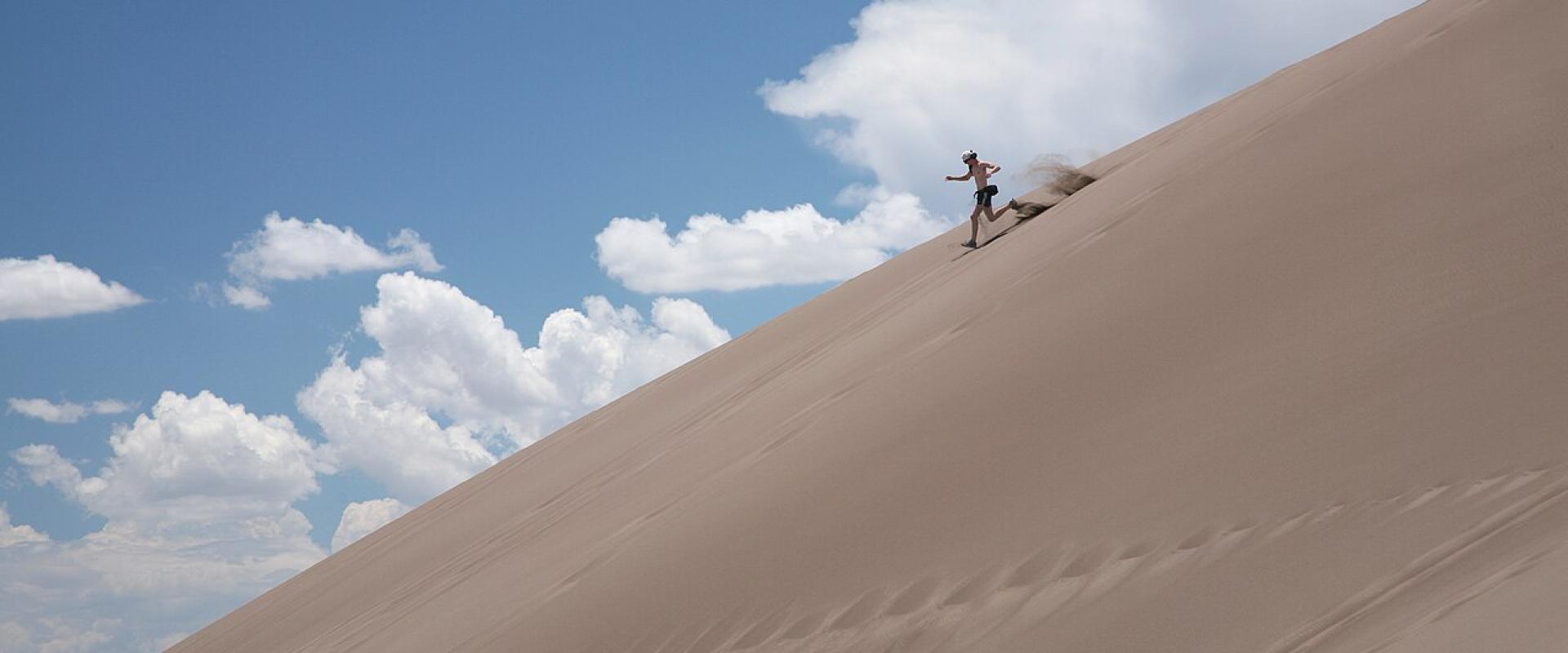
What it's for: The tallest dunes in North America, piled against the Sangre de Cristo Mountains in the San Luis Valley. Spend a few hours climbing, sandboarding or sledding on the dunes, then head up into the forests and alpine lakes of the preserve.
Best season: Late May and early June, when Medano Creek runs across the sand at the foot of the dunes. In good years it produces "surge flow" waves that kids can float on. The creek usually reaches the main parking area in April and dries up there by July, and it doesn't flow every year. In spring 2026 the creek bed at the parking lot stayed dry. Summer afternoons get very hot on the sand and often bring thunderstorms, so climb early in the morning or in the evening. Fall is excellent for climbing, with cooler sand and fewer people.
Know before you go: Entry is $25 per vehicle. Regular sleds and cardboard won't slide on dry sand. Rent a proper sandboard or sand sled in the area.
Black Canyon of the Gunnison National Park
What it's for: Some of the steepest cliffs and oldest rock in North America. Its dark walls drop almost straight down to the Gunnison River. The South Rim Road, east of Montrose, lines up a series of overlooks. The Painted Wall, streaked with pale bands of rock, is the most famous.
Best season: May to October for the full park. The South Rim is the only area open year-round, and services are limited in winter and early spring. The North Rim is a long drive around. It's quieter, with more limited facilities.
Know before you go: Entry is $30 per vehicle for seven days. Payment options at the North Rim are limited, so buy a digital pass before you go. The inner canyon routes are steep, unmaintained scrambles that need a wilderness permit. The rim overlooks are the visit for nearly everyone.
National monuments worth adding
- Colorado National Monument near Grand Junction has red-rock canyons and monoliths along Rim Rock Drive. It's an easy add-on for anyone driving I-70 to or from Utah.
- Dinosaur National Monument straddles the Colorado–Utah line. The dinosaur fossil wall is on the Utah side near Jensen. The Colorado side has deep river canyons.
- Florissant Fossil Beds, west of Colorado Springs, has giant petrified redwood stumps and a short loop trail. It's a good half-day stop on the way to Cripple Creek or the Sand Dunes.
- Canyons of the Ancients, near Mesa Verde, protects thousands of archaeological sites. They're scattered and unstaffed, so start at the visitor center and museum in Dolores.
A few top state parks
Colorado's state parks need their own daily or annual pass. National park passes don't count. Good picks:
- Eldorado Canyon near Boulder has sheer sandstone walls, rock climbing and short canyon trails.
- Roxborough, southwest of Denver, has red sandstone fins and gentle hikes. It's day-use only.
- Golden Gate Canyon, about an hour from Denver, has forest trails, aspens in fall and views of the Divide.
- Mueller, near Woodland Park west of Colorado Springs, has quiet trails, wildlife and views of Pikes Peak.
- Ridgway sits on the San Juan Skyway between Montrose and Ouray. Its reservoir makes a good stop on the southwest loop.
Daily vehicle passes run $4 to $17 depending on the park, and out-of-state plates pay more. An annual vehicle pass is $80.
Putting a route together
For a first trip, one route covers most of it. Spend two or three days around Rocky Mountain from Denver. Then drive south and west to Great Sand Dunes, Mesa Verde and Black Canyon, adding the San Juan Skyway between Durango, Ouray and Montrose. Allow at least a week for the loop. An America the Beautiful pass ($80 for US residents, $250 for non-residents) covers entry at all four parks and the national monuments. If you're visiting three or more of them, buy one.