

Winter driving in Colorado mostly means one road: I-70 west of Denver, which climbs to about 11,000 feet at the Eisenhower-Johnson Memorial Tunnel on its way to the ski resorts. Here's what it takes to drive it safely and legally between fall and spring. Your car needs tires that meet the state Traction Law, or an approved device you can fit when the Chain Law is called. Check COtrip.org before you leave. Build in slack, because a single crash can stop traffic for hours. If you'd rather not drive at all, buses run from Denver to several ski areas.
The I-70 mountain corridor
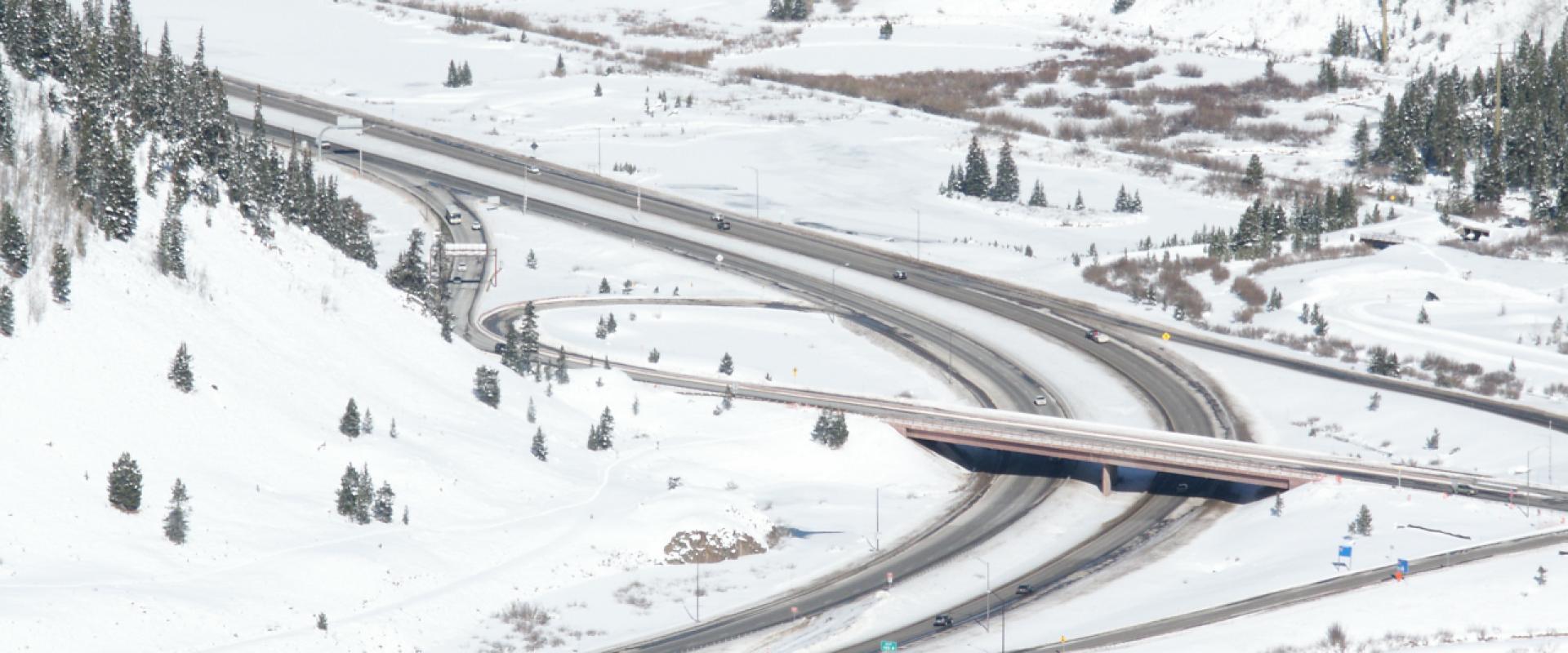
From the foothills at Morrison, I-70 runs west past Idaho Springs and Georgetown and climbs to the Eisenhower-Johnson Memorial Tunnel under the Continental Divide. The tunnel's west portal sits at 11,158 feet, the highest point on the US Interstate system. The road drops into Summit County (Silverthorne, Frisco, Copper Mountain), climbs again over Vail Pass, then descends through Vail and Glenwood Canyon toward Grand Junction.
The weather can change completely within a few miles. The Front Range can be dry and sunny while the tunnel approaches are snow-packed. The steep grades on both sides of the tunnel and on Vail Pass are where spun-out trucks and crashes most often close lanes. Weekend ski traffic adds its own problem. Westbound Saturday mornings and eastbound Sunday afternoons back up heavily even in good weather, so leaving early or traveling midweek makes a real difference.
The Traction Law and the Chain Law
The Colorado Department of Transportation (CDOT) can put two levels of restriction on any state highway during storms. Electronic signs, COtrip and the 511 phone line announce them.
Traction Law. This is used during winter storms or whenever conditions call for it. CDOT's current list of compliant vehicles:
- AWD or 4WD vehicles with mud-and-snow tires (marked M+S, M/S or with the mountain-snowflake symbol) and at least 3/16-inch tread, or
- AWD or 4WD vehicles with winter tires (same markings) and at least 3/16-inch tread, or
- AWD or 4WD vehicles with tires the manufacturer rates as all-weather and at least 3/16-inch tread, or
- any vehicle with chains or an approved alternative traction device.
So a two-wheel-drive car can still comply, but only if you carry chains or an approved device and put them on. CDOT's approved alternatives include fabric tire socks such as AutoSock and ISSE, plus cable chains like Alpha Trax and EasySox. The full list is on CDOT's Approved Products List.
Chain Law. This is used during severe storms and is the last step before a highway closes. Every passenger vehicle needs chains or an approved alternative traction device, whatever its drivetrain or tires.
Fines. If you're stopped without compliant equipment while either law is in effect, the fine is $100 plus a $33 surcharge. If your vehicle blocks a travel lane, it rises to $500 plus a $157 surcharge. Colorado State Patrol enforces both laws.
There's also a seasonal rule specific to I-70. A 2019 state law (HB19-1207) requires traction equipment to be carried on I-70 between Dotsero (milepost 133) and Morrison (milepost 259) from September 1 to May 31, when roads are icy or snow-packed. In practice, treat any fall-to-spring mountain drive on I-70 as a trip that needs compliant tires or a device in the trunk.
Tires and rental cars
Most of the risk comes down to tires, so check the sidewall before you leave the rental lot. Look for the M+S marking or the mountain-snowflake symbol, and make sure the tread is at least 3/16 inch deep. CDOT ranks the options this way:
- Winter tires (mountain-snowflake plus M+S) are the safest on snow and ice.
- All-weather tires are fine in slush, wet snow and heavy rain, and can stay on year-round.
- Plain M+S all-season tires are acceptable in light snow but noticeably weaker than true winter tires.
When you book a rental for a ski trip, reserve an AWD or 4WD vehicle and ask what tires it has. Then check them yourself at pickup. A 4WD badge doesn't make a car compliant on worn tires, and 4WD helps you accelerate, not stop. If you get a two-wheel-drive car, buy an approved tire sock in Denver before heading up. Check your rental agreement too, since some prohibit chains.
Loveland Pass and the tunnel
US 6 over Loveland Pass (11,990 feet) is the old route over the Divide. It runs alongside the tunnel and passes Arapahoe Basin and Loveland Ski Area. Trucks carrying hazardous materials can't use the tunnel and are routed over the pass, along with bicycles and pedestrians. In winter, Loveland Pass is narrow, exposed, steep and often closed during storms. Unless you're heading to A-Basin from the Keystone side, stay on I-70.
Checking conditions and closures
- COtrip.org and the COtrip app show live road conditions, Traction and Chain Law status, closures and road cameras. You can also dial 511 in Colorado.
- Check right before you leave and again at a safe stop (Idaho Springs, Silverthorne). Conditions at the tunnel can differ completely from Denver.
- Highways close for crashes, avalanche control and severe weather. Know where you could wait it out, and keep enough fuel to idle.
- Pack water, snacks, warm layers, a phone charger, an ice scraper and a small shovel. If traffic stops for a long time, you'll be sitting in your car.
Driving technique for flatlanders
Slow down well before curves and downhill grades. Leave much more following distance than feels normal, and brake gently and early. On long descents, such as east from the tunnel or down from Vail Pass, shift to a lower gear so you're not riding the brakes. Bridges, shaded curves and tunnel exits freeze first. If you start to slide, ease off the pedals and steer where you want to go. And don't pass snowplows. The road ahead of them is worse than the road behind.
Not driving at all: Bustang, Snowstang and Pegasus
CDOT's bus network gives you options for the I-70 corridor:
- Bustang runs the I-70 line between Denver and Grand Junction.
- Snowstang is Bustang's seasonal ski service from Denver. Its route list includes Arapahoe Basin, Breckenridge and Copper Mountain.
- Pegasus is a smaller shuttle van running Denver to Avon. It can use the I-70 Mountain Express Lane and has Wi-Fi.
Schedules, fares and the 2026/27 Snowstang season dates weren't posted on ridebustang.com when this was written. Check there before you plan around a specific bus. Most resort towns run free local shuttles, so a car-free ski trip is realistic if you're staying in Breckenridge, Vail or Winter Park.