Breckenridge's expert terrain at a glance
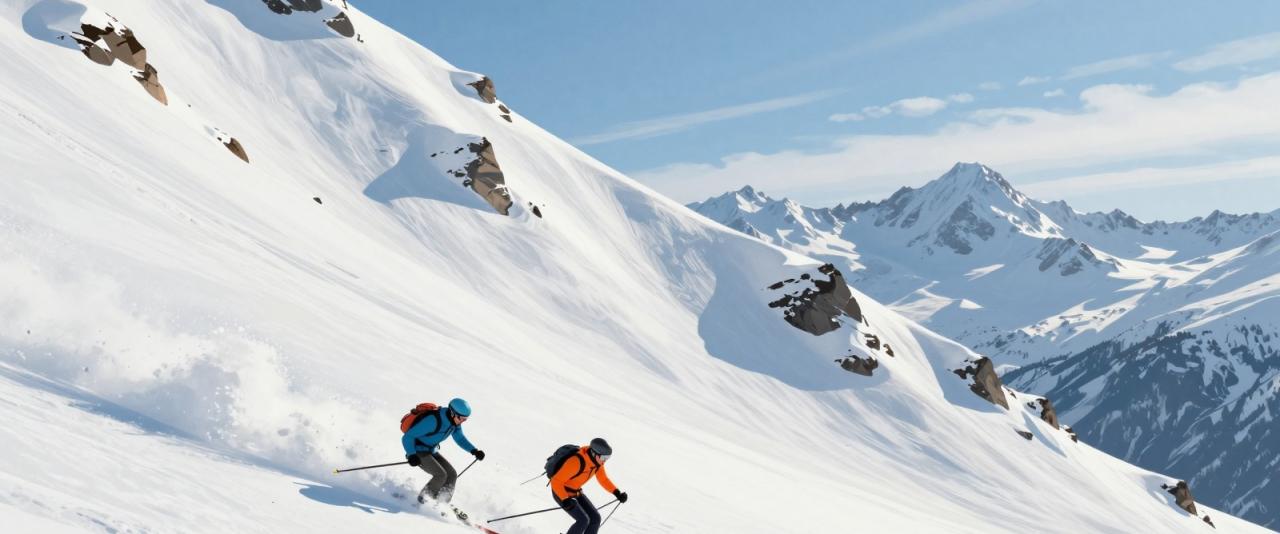
Breckenridge is often thought of as a family resort, and its lower slopes are full of wide green and blue runs. But the upper mountain, spread across Peaks 6 through 10, holds some of the highest and steepest lift-served terrain in Colorado. The town sits at about 9,600 feet and the highest lift tops out near 12,840 feet, so expert skiing here means steep pitches at serious altitude, often in wind and flat light. Ratings below follow the resort's trail map; double-black diamond terrain is for strong, experienced skiers and riders only. Terrain openings depend on snow and wind, so check the daily lift and terrain report.
Peak 8: Imperial Bowl and the Lake Chutes
Peak 8 is the heart of Breckenridge's expert terrain. The Imperial Express SuperChair is the highest chairlift in North America and saves a long hike to the upper bowls. From its top, Imperial Bowl drops away in wide, steep, above-tree-line pitches that often hold wind-buffed snow. A short hike from the top of the lift leads to the Lake Chutes, narrow, rocky lines that are among the steepest in-bounds terrain at the resort. Whale's Tail, also reached from the Imperial area via a short walk and a gate, drops over a cornice into steep terrain.
Lower on Peak 8, the T-Bar serves Horseshoe and Contest bowls, open expert bowls that are a little less exposed than Imperial and good for working up to it. Because this terrain is high and treeless, it closes in strong wind and is hard to read in flat light; save it for clear, calm days.
Peaks 6 and 7: high bowls off the Kensho lift
On Peak 6, the Kensho SuperChair opened up a large area of high alpine bowls and above-tree-line terrain. Much of it is rated black or double black and has a backcountry feel, with wide open faces and some short hikes for the best lines. Peak 7, next door, mixes blue cruisers with steeper bowls reached from the same high terrain. These areas are often less crowded than Peak 8 in the morning.
Peaks 9 and 10: bumps and trees
Peak 9 has the resort's gentlest lower runs, but its back side, served by the E-Chair, is a different story: a cluster of steep, mogulled double-black runs such as Inferno, which locals favour when the bumps are well formed. These runs are narrow and relentless and punish tired legs, so ski them early in the day.
Peak 10, served by the Falcon SuperChair, is known for long, steep black runs and glades that are often less busy than the rest of the mountain. It is a solid choice for advanced skiers who want sustained pitch below tree line, where visibility is better on stormy days.
Gear for steep, high terrain
Helmet. A properly fitted helmet is standard on expert terrain, where falls on hard or rocky snow can be serious.
Goggles. Carry a lens for flat light as well as one for bright sun. Above tree line on Peak 8 and Peak 6, flat light can erase all texture from the snow, making it difficult to judge pitch.
Layers. Wind on the upper peaks can make it far colder than the base. Wear a moisture-wicking base layer, an insulating mid-layer and a windproof, waterproof shell, plus a face covering for exposed lifts.
Boots and skis. Steep, firm snow calls for boots that fit snugly and skis with sharp edges. If you rent, ask for a performance or demo ski suited to firm, steep snow.
Avalanche awareness off the groomers
Within the resort boundary, ski patrol carries out avalanche control on the steep bowls and chutes before opening them, and terrain is closed when conditions are unsafe. Respect every rope line and closed sign. Even on open in-bounds terrain, ski with a partner on the steepest lines, keep each other in sight and watch for tree wells in the glades after big storms.
The backcountry beyond the ski area boundary is different. It is not controlled or patrolled, and avalanches there can be deadly. Only leave the boundary through designated access gates if you have avalanche training, are carrying a transceiver, probe and shovel, are travelling with a trained partner and have checked the Colorado Avalanche Information Center forecast for that day.