Start at the Aspen Art Museum
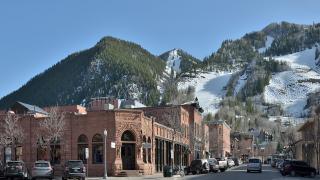
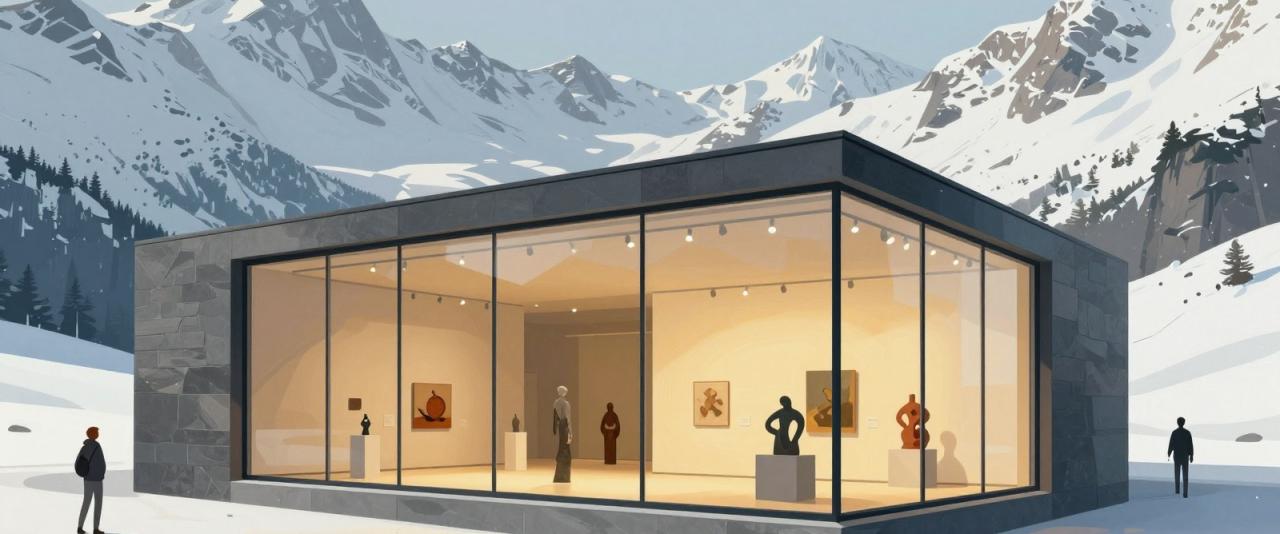
The Aspen Art Museum is the anchor of the town's art scene and the easiest place to begin. Its current building, designed by the Japanese architect Shigeru Ban and opened in 2014, sits on the corner of Hyman Avenue and Spring Street in the downtown core, a short walk from the Silver Queen Gondola. The facade is wrapped in a woven screen of composite strips, and a glass elevator and a long, slow staircase lift you through three floors of galleries to a rooftop terrace with a sculpture deck and a café looking straight at Aspen Mountain.
The museum is a non-collecting institution, which means there is no permanent collection to work through. Instead it runs a steady rotation of contemporary exhibitions, often by international artists showing in the United States for the first time. That makes it worth checking what is on before you go rather than assuming you know what you will see. General admission has been free for years, so it is easy to drop in for half an hour between other plans. Allow more time if you want the roof: on a clear afternoon the terrace is one of the best free viewpoints in town.
Walking the downtown galleries
Aspen's commercial galleries are concentrated within a few blocks of the museum, mostly along Hyman, Cooper and Galena streets and around the pedestrian malls. A loop on foot takes an hour or two. The mix is wide: blue-chip contemporary dealers that open seasonal Aspen spaces, galleries focused on modern and post-war names, photography, and Western and wildlife art. Several major international galleries run Aspen outposts, and some are open only in the busy winter and summer seasons, so expect a few dark windows in spring and late autumn.
Gallery etiquette is relaxed. You do not need an appointment to walk in, staff are used to visitors who are browsing rather than buying, and asking about an artist or a price is normal. Evenings are a good time to wander, because many galleries stay open late in high season and the streets are quieter once the lifts close.
The summer season: Intersect Aspen and Anderson Ranch
Summer is when Aspen's art calendar is fullest. The headline event is Intersect Aspen, an art fair held at the Aspen Ice Garden, the town's indoor rink, which is converted into fair booths for about a week at the end of July and the start of August. The fair grew out of the earlier Art Aspen fair and now brings in dealers from around the country and abroad, alongside talks and programming. Dates shift slightly each year, so check the fair's website before planning around it. The same weeks tend to be busy with museum fundraisers and gallery openings, and lodging prices rise accordingly.
Ten miles down the valley in Snowmass Village, Anderson Ranch Arts Center is the other essential stop. Founded in 1966 on an old sheep ranch, it is a working arts campus with studios for ceramics, painting, photography, printmaking, sculpture and woodworking. In summer it runs week-long workshops for adults and children, and its public program of artist talks and lectures draws well-known names. Even if you are not taking a class, you can walk the grounds, visit the gallery and the shop, and eat at the café. Free RFTA buses connect Aspen and Snowmass, so you do not need a car.
Local and regional art
To see work by artists who live in the Roaring Fork Valley, go to the Red Brick Center for the Arts on East Hallam Street. The city-owned building, a former school, houses artist studios and a gallery with changing exhibitions, many of them featuring local and regional painters, photographers and craftspeople. It is a useful counterweight to the international galleries in the core, and the studios give you a chance to meet working artists.
Aspen also has a long modernist thread. The Austrian-born Bauhaus artist and designer Herbert Bayer moved to Aspen in 1946 and shaped much of the look of the Aspen Institute campus in the West End, including its buildings, earthworks and sculptures. The Resnick Center for Herbert Bayer Studies, on the Institute campus, shows his paintings, graphic design and archives, and the grounds are open to walk. Combine it with a stroll through the West End's Victorian houses for a quiet afternoon.
Practical tips
Aspen sits at roughly 7,900 feet, so drink plenty of water and expect to tire a little faster than at sea level on a day of walking. Downtown is compact enough to cover on foot, and parking is limited and metered, so leave the car at your lodging or use the free in-town buses. Many galleries and the museum keep reduced hours in the shoulder seasons of April to May and October to November, when some close entirely for a few weeks; winter and summer are the best times for a full gallery day. If you want to combine art with the outdoors, ride the Silver Queen Gondola in summer and look for occasional installations and events at the top of Aspen Mountain, then come down for the museum roof at sunset.