Sangre de Cristo Range
- Where
- Alamosa, San Luis Valley
- Directions
- Directions
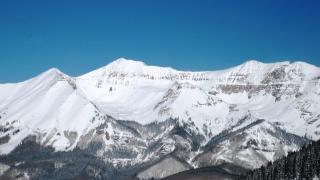
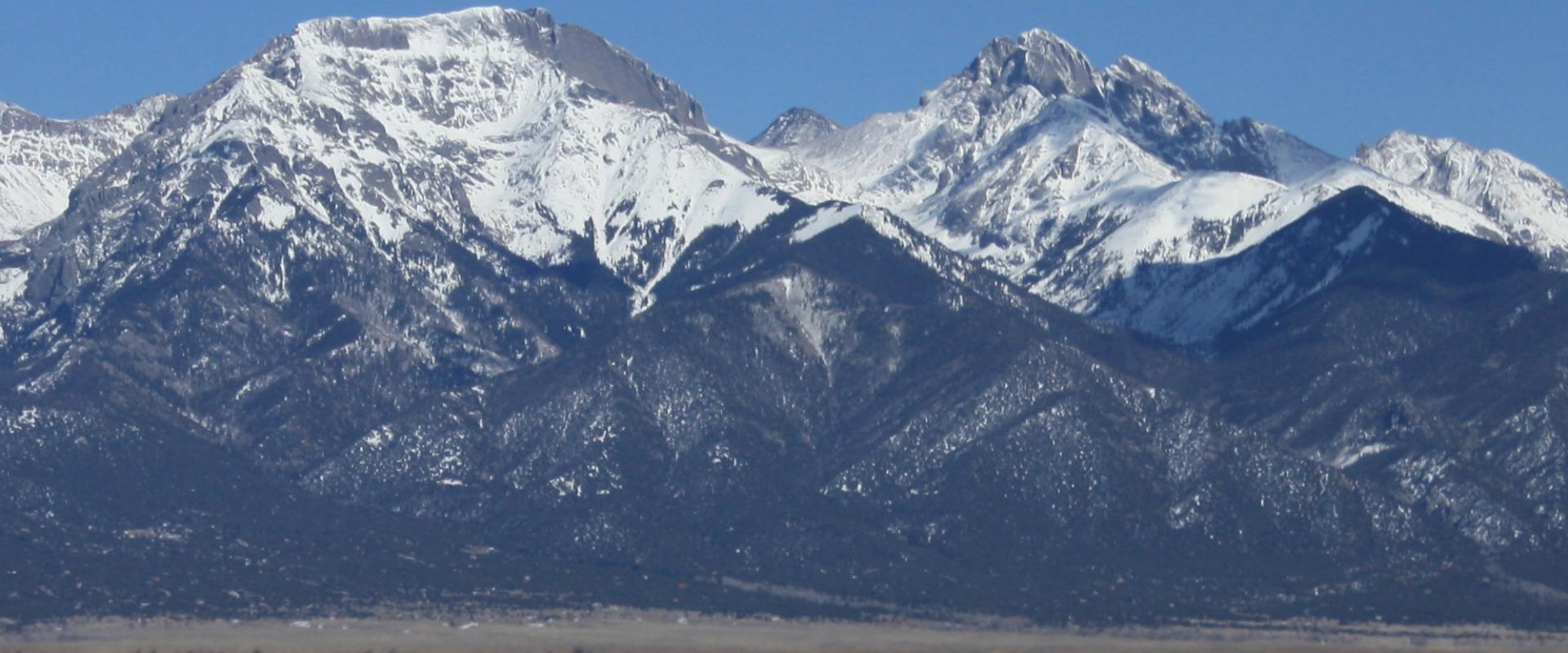
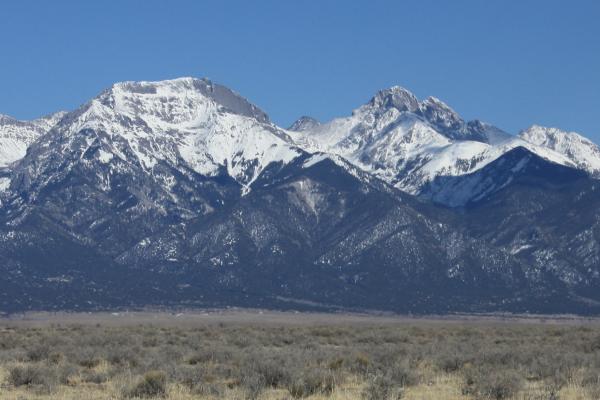
The Sangre de Cristo Range forms the long eastern wall of the San Luis Valley, running from near Poncha Pass in south-central Colorado southward into northern New Mexico. The Spanish name means Blood of Christ, and it is commonly linked to the reddish glow that the peaks take on at sunrise and sunset. From Alamosa, the mountains fill the eastern horizon above a very flat valley floor, and the contrast between plain and peak is one of the most striking views in Colorado.
The range is part of the Rocky Mountains and holds some of the state's most demanding summits. Blanca Peak, at 14,345 feet, is the highest, and the Colorado portion also includes Crestone Peak, Crestone Needle, Kit Carson Peak and Culebra Peak among its fourteeners. Several of these are serious climbs that require experience, route finding and attention to weather. The slopes below are a mix of forest, alpine lakes, meadows and rock, and the western flank drops quickly to the sand and grassland of the valley, which is why Great Sand Dunes National Park and Preserve lies right at its foot.
The area around it is recognized as the Sangre de Cristo National Heritage Area, which covers parts of the San Luis Valley and neighboring counties. The designation reflects the layered history of the region, with Native American peoples, Hispano settlers from the 1800s and Anglo pioneers each leaving marks on its towns, churches, irrigation ditches and ranches. The nearby San Luis Valley Museum and Heritage Center in Alamosa is a good place to learn the background.
Visitors usually use Alamosa as a base. From town, they can drive to trailheads on the mountain flank, view the range from the Great Sand Dunes, or head to the wildlife refuges on the valley floor, where Alamosa National Wildlife Refuge protects wetlands, cottonwoods and bird habitat. Spring brings migrating sandhill cranes to the valley, and the dry air makes for excellent night skies.
The range suits mountaineers, day hikers, photographers and drivers who simply want one of the great horizons in the Rockies. Trails and road access vary by area, and many high routes hold snow well into early summer, so conditions should be checked locally before any serious outing. The view alone, from almost any point in the valley, is worth the stop.
Categories
More photos coming soon

Questions people ask
Quick Facts
Best Time to Visit
May through September offers comfortable weather for outdoor exploration.